While groundwater usually has low DO levels, groundwater-fed streams can hold more oxygen due to the influx of colder water and the mixing it causes ¹⁵. While water equilibrates toward 100% air saturation, dissolved oxygen levels will also fluctuate with temperature, salinity and pressure changes ³. As such, dissolved oxygen levels can range from less than 1 mg/L to more than 20 mg/L depending on how all of these factors interact. In freshwater systems such as lakes, rivers and streams, dissolved oxygen concentrations will vary by season, location and water depth. Carbon dioxide reacts with limewater to form calcium carbonate, which precipitates out of the solution. The carbon dioxide and limewater react to produce water in addition to the calcium carbonate.
What Happens When Water And Air Mix Calcium carbonate is chalk, and when it is produced, it precipitates and solid particles of chalk appear. The appearance of this solid makes the liquid appear 'milky'. The white milky suspension/precipitate is caused by the formation of calcium carbonate. The characteristic carbon dioxide test, is checking that the limewater is milky.

Bubbling carbon dioxide through the solution for an extended period of time makes the solution become clear and colorless. This happens as the carbon dioxide forms acidic carbonic acid when it dissolves in the water, the carbonic acid reacts further with the calcium carbonate. This chemistry is important in understanding how hard water is formed and then limescale is formed in kettles and hot water boilers. Desiccant air dryersare used for applications that require very dry compressed air.

These dryers work by removing water from the air through a chemical process. A desiccant is a solid that reacts chemically with water to form a bond. Most desiccant air dryers use activated alumina or molecular sieve desiccants.

Compressed air is passed through a tower containing the desiccant material using a blower. Depending on the model, desiccant air dryers can get compressed air down to a -40 to -100°F dew point, removing nearly all water vapor from the air stream. This is necessary for processes that require ultra-dry air or are operating at less than 34°F. These dryers use more energy than other drying systems and also consume between 5-18% of the compressed air supply in their operation. But if ultra-dry air is needed, they are the most effective method available to remove moisture from your air compressor and compressed air supply. Lake stratificationThe uppermost layer of a lake, known as the epilimnion, is exposed to solar radiation and contact with the atmosphere, keeping it warmer.

The depth of the epilimnion is dependent on the temperature exchange, usually determined by water clarity and depth of mixing ¹¹. Within this upper layer, algae and phytoplankton engage in photosynthesis. Between the contact with the air, potential for aeration and the byproducts of photosynthesis, dissolved oxygen in the epilimnion remains near 100% saturation. The exact levels of DO vary depending on the temperature of the water, the amount of photosynthesis occurring and the quantity of dissolved oxygen used for respiration by aquatic life. In general, dissolved oxygen levels are about 20% less in seawater than in freshwater ³. Gravity then takes over and the large bubbles pull all the liquids and contents up to the surface resulting in fast, energy efficient tank mixing.
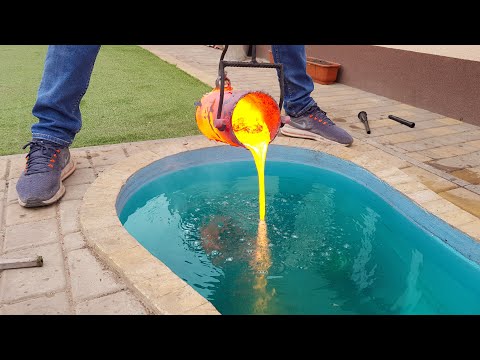
Sodium is ordinarily quite reactive with air, and the reactivity is a function of the relative humidity, or water-vapour content of the air. The corrosion of solid sodium by oxygen also is accelerated by the presence of small amounts of impurities in the sodium. In ordinary air, sodium metal reacts to form a sodium hydroxide film, which can rapidly absorb carbon dioxide from the air, forming sodium bicarbonate. Sodium does not react with nitrogen, so sodium is usually kept immersed in a nitrogen atmosphere . It is significantly more reactive in air as a liquid than as a solid, and the liquid can ignite at about 125 °C (257 °F). In a comparatively dry atmosphere, sodium burns quietly, giving off a dense white caustic smoke, which can cause choking and coughing.

The temperature of burning sodium increases rapidly to more than 800 °C (1,500 °F), and under these conditions the fire is extremely difficult to extinguish. Special dry-powder fire extinguishers are required, since sodium reacts with carbon dioxide, a common propellant in regular fire extinguishers. If the hypolimnion is deep enough to never mix with the upper layers, it is known as the monimolimnion.

The hypolimnion is separated from the upper layers by the chemocline or halocline. These clines mark the boundary between oxic and anoxic water and salinity gradients, respectively. While lab conditions would conclude that at colder temperatures and higher pressures water can hold more dissolved oxygen, this is not always the result. In the hypolimnion, bacteria and fungi use dissolved oxygen to decompose organic material ⁶.

This organic material comes from dead algae and other organisms that sink to the bottom. The dissolved oxygen used in decomposition is not replaced – there is no atmospheric contact, aeration or photosynthesis to restore DO levels in the hypolimnion ¹¹. Thus the process of decomposition "uses up" all of the oxygen within this layer.

The equation shows that water will remain at 100% air saturation at equilibrium. Aquatic respiration and decomposition lower DO concentrations, while rapid aeration and photosynthesis can contribute to supersaturation. During the process of photosynthesis, oxygen is produced as a waste product. This adds to the dissolved oxygen concentration in the water, potentially bringing it above 100% saturation ¹⁴. This means that dissolved oxygen levels can easily be more than 100% air saturation during the day in photosynthetically active bodies of water ¹⁴.

A eutrophic lake where dissolved-oxygen concentrations are low. Bacteria in water can consume oxygen as organic matter decays. Water near the surface of the lake– the epilimnion– is too warm for them, while water near the bottom–the hypolimnion– has too little oxygen.
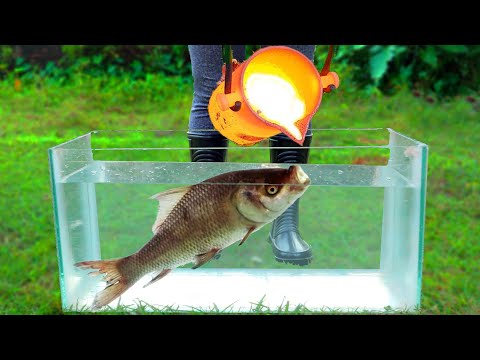
Conditions may become especially serious during a period of hot, calm weather, resulting in the loss of many fish. You may have heard about summertime fish kills in local lakes that likely result from this problem. Sockeye salmon with gas bubble diseaseJust as low dissolved oxygen can cause problems, so too can high concentrations. Supersaturated water can cause gas bubble disease in fish and invertebrates ¹². Significant death rates occur when dissolved oxygen remains above 115%-120% air saturation for a period of time. Total mortality occurs in young salmon and trout in under three days at 120% dissolved oxygen saturation ¹².

Invertebrates, while also affected by gas bubble disease, can usually tolerate higher levels of supersaturation than fish ¹². Many tropical saltwater fish, including clown fish, angel fish and groupers require higher levels of DO, such as those surrounding coral reefs. Coral reefs are found in the euphotic zone (where light penetrates the water – usually not deeper than 70 m).
Higher dissolved oxygen concentrations are generally found around coral reefs due to photosynthesis and aeration from eddies and breaking waves ³⁷. These DO levels can fluctuate from 4-15 mg/L, though they usually remain around 5-8 mg/L, cycling between day photosynthesis production and night plant respiration ³⁸. In terms of air saturation, this means that dissolved oxygen near coral reefs can easily range from % ³⁹. If there is a significant occurrence of photosynthesis or a rapid temperature change, the water can achieve DO levels over 100% air saturation. At these levels, the dissolved oxygen will dissipate into the surrounding water and air until it levels out at 100% ³.

Not all water depths reach 100% air saturationIn a stable body of water with no stratification, dissolved oxygen will remain at 100% air saturation. 100% air saturation means that the water is holding as many dissolved gas molecules as it can in equilibrium. At equilibrium, the percentage of each gas in the water would be equivalent to the percentage of that gas in the atmosphere – i.e. its partial pressure ¹³. The water will slowly absorb oxygen and other gasses from the atmosphere until it reaches equilibrium at complete saturation 10. This process is sped up by wind-driven waves and other sources of aeration ³.
Extended periods of supersaturation can occur in highly aerated waters, often near hydropower dams and waterfalls, or due to excessive photosynthetic activity. Algae blooms can cause air saturations of over 100% due to large amounts of oxygen as a photosynthetic byproduct. This is often coupled with higher water temperatures, which also affects saturation. ¹² At higher temperatures, water becomes 100% saturated at lower concentrations, so higher dissolved oxygen concentrations mean even higher air saturation levels. Rapid temperature changes can also create DO readings greater than 100% ¹⁴. On a cool summer night, a lake's temperature might be 60° F.

At 100% air saturation, this lake's dissolved oxygen levels would be at 9.66 mg/L. When the sun rises and warms up the lake to 70° F, 100% air saturation should equate to 8.68 mg/L DO ³. But if there is no wind to move the equilibration along, the lake will still contain that initial 9.66 mg/L DO, an air saturation of 111%. Warm, shallow saltwater reaches 100% air saturation at a lower concentration, but can often achieve levels over 100% due to photosynthesis and aeration.

Shallow waters also remain closer to 100% saturation due to atmospheric contact and constant diffusion ¹⁰. The first place that moisture condenses is in the air receiver tank. As it makes its way to the receiver tank, the air cools down, allowing excess water vapor to condense back into a liquid. The first step in your moisture control plan is to ensure that excess water is drained from the air compression system on a regular basis. This can be accomplished most simply with a manual drain valve. Water should be drained at least once daily if draining manually.
Automatic timer-based and pneumatic drain valves eliminate the need to remember to drain the receiver tank. An auto drain valve will automatically open to release excess liquid on a regular schedule or in response to a sensor. This can be a valuable benefit if your maintenance staff is stretched thin or if the air receiver tank is not in an easily accessible location.
Draining the air compressor will not remove water that is still held as vapor in the air, but it will prevent excess liquid from building up within the tank and air supply lines. We all know that the copper oxide + sulfuric acid reaction results in a blue-colored chemical. But have you ever wondered why copper oxide sulphuric acid reaction results in a blue-colored chemical? When it reacts with sulphuric acid, it produces a cyan-blue colored chemical which is known as copper sulphate. The copper and sulphate ions dissociate as the copper sulphate gets dissolved in water.

Although there is no change in the effect, however, the nature of the split between t2g and eg orbitals in this new complex is such that it absorbs reddish-orange light. Due to this absorption, you will see a bluish-colored solution. To calculate dissolved oxygen concentrations from air saturation, it is necessary to know the temperature and salinity of the sample. Barometric pressure has already been accounted for as the partial pressure of oxygen contributes to the percent air saturation 7. Salinity and temperature can then be used in Henry's Law to calculate what the DO concentration would be at 100% air saturation 10. These charts show the dissolved oxygen concentration at 100% air saturation at varying temperatures, and salinities.

This value can then be multiplied by the measured percent air saturation to calculate the dissolved oxygen concentration 7. Unlike small rapids and waves, the water flowing over a dam or waterfall traps and carries air with it, which is then plunged into the water. At greater depths and thus greater hydrostatic pressures, this entrained air is forced into solution, potentially raising saturation levels over 100% ¹². In deeper waters, DO can remain below 100% due to the respiration of aquatic organisms and microbial decomposition. These deeper levels of water often do not reach 100% air saturation equilibrium because they are not shallow enough to be affected by the waves and photosynthesis at the surface ³.

This water is below an invisible boundary called the thermocline ¹¹. In the early 1990's researchers at the University of Maine completed two studies on the contribution of domestic water use to indoor airborne radon exposure patterns. In the first of these studies, data from 68 homes was examined to determine the proportion of chronic airborne radon due solely to domestic water use. Comparison of radon levels to water usage show that water-derived airborne radon comprises, on average, about 32% of chronic domestic airborne radon levels. In 14 of the 68 cases examined, radon from water use contributed more than 50% of the total airborne radon. This is the zone where many coral reefs grow, and DO levels remain near 100% air saturation due to eddies, breaking waves and photosynthesis 45.
This zone is also where most oceanic benthic (bottom-dwelling) organisms exist. Oceanic benthic fish do not live at the greatest depths of the ocean. They dwell at the seafloor near to coasts and oceanic shelves while remaining in the upper levels of the ocean.

Below the epilimnion is the metalimnion, a transitional layer that fluctuates in thickness and temperature. The boundary between the epilimnion and metalimnion is called the thermocline – the point at which water temperature begins to steadily drop off ¹¹. If light can penetrate beyond the thermocline and photosynthesis occurs in this strata, the metalimnion can achieve an oxygen maximum ¹¹.

This means that the dissolved oxygen level will be higher in the metalimnion than in the epilimnion. But in eutrophic or nutrient-rich lakes, the respiration of organisms can deplete dissolved oxygen levels, creating a metalimnetic oxygen minimum ⁴². First, the solubility of oxygen decreases as temperature increases ¹. This means that warmer surface water requires less dissolved oxygen to reach 100% air saturation than does deeper, cooler water.

For example, at sea level and 4°C (39°F), 100% air-saturated water would hold 10.92 mg/L of dissolved oxygen. ³ But if the temperature were raised to room temperature, 21°C (70°F), there would only be 8.68 mg/L DO at 100% air saturation ³. Dissolved oxygen is important to many forms of aquatic life.Dissolved oxygen is necessary to many forms of life including fish, invertebrates, bacteria and plants. These organisms use oxygen in respiration, similar to organisms on land.
The amount of dissolved oxygen needed varies from creature to creature. Bottom feeders, crabs, oysters and worms need minimal amounts of oxygen (1-6 mg/L), while shallow water fish need higher levels (4-15 mg/L)⁵. Dissolved oxygen in surface water is used by all forms of aquatic life; therefore, this constituent typically is measured to assess the "health" of lakes and streams. Oxygen enters a stream from the atmosphere and from groundwater discharge. The contribution of oxygen from groundwater discharge is significant, however, only in areas where groundwater is a large component of streamflow, such as in areas of glacial deposits.

Photosynthesis is the primary process affecting the dissolved-oxygen/temperature relation; water clarity and strength and duration of sunlight, in turn, affect the rate of photosynthesis. The incremental drop in air temperature slowly decreases the surface water temperature, and the layers in the pond mix gradually. On the other hand, rapid turnover can cause a fish kill by quickly diluting the oxygen in the pond. Rapid turnovers can occur anytime during the warmer months of the year when ponds are stratified, and they most often coincide with storm events or windy days. A cold rain or the blowing winds of a storm front can cause rapid mixing and result in a fish kill. The primary source of oxygen in ponds is the atmosphere, the air above the pond.


